Common Soil Sampling Mistakes and How to Avoid Them
Soil sampling mistakes are more common than most researchers and agronomists like to admit. These mistakes don't just waste time and money but they also expose a deeper issue in traditional soil testing workflows. Even when sampling is done correctly, delays between collection and analysis can alter biological activity, particularly in microbiome testing, leading to results that don’t fully reflect real field conditions.
MicroBIOMETER is a soil testing tool
designed for researchers, farmers, and soil scientists who rely on accurate,
field-relevant soil health data to make meaningful decisions.
In this blog, we'll cover:
- The most frequent soil sampling mistakes in the field
- Lab handling errors that compromise results
- Bridging the gap between soil sampling and test results
· How field-based testing is changing soil health measurement
The Most Common Field-Level Soil
Sampling Mistakes
Most bad soil data starts in the field, not
the lab.
Sampling at the wrong depth is one of the most frequent errors. Different analyses require
different depths. Surface nutrient analysis typically samples the top 0 to 15
cm. Subsoil analysis goes deeper. Microbiome and biological activity analysis
often focuses on the very top layer. Using the same depth for all purposes
produces misleading data.
Composite sample bias happens when you're combining cores from multiple points within a
field or sampling area. If you collect more cores from one area type than
another, or if your sampling points aren't genuinely representative of the
area's variability, your composite doesn't reflect the true average.
Sampling at the wrong time matters more than most people account for. Soil moisture,
temperature, and recent land management activity all affect the data you get.
Comparing samples taken at different times of year or different stages of a
crop cycle introduces variability that isn't real.
Contamination from equipment is a constant risk. Residue from previous samples, lubricants,
rust, or residue from cleaning products on sampling tools can alter test
results, particularly for microbiological analyses.
Even when field sampling is executed correctly, one major variable remains difficult to control: the time between sampling and analysis. For microbiological testing, this delay allows biological processes to continue, meaning the sample you analyze may no longer represent the conditions present at the time of collection.
Lab Errors in Soil Testing: What Happens
After the Sample Leaves the Field
Getting the soil sample into the right
container at the right time is just the beginning.
Improper storage and transport between collection and analysis allows biological activity to
continue, particularly for microbiological tests. For accurate microbiome soil
analysis, samples need to be processed quickly or stored under conditions that
halt biological change.
Mislabeled samples are more common than anyone admits and have obvious consequences for
data reliability.
Subsampling errors in the lab, when the subsample taken for analysis isn't
representative of the bulk sample you submitted, introduce variance that isn't
from the field.
Moisture content variation affects nutrient analysis results because many results are reported
on a dry weight basis. If moisture isn't measured and accounted for correctly,
your reported concentrations are off.
Cross-contamination in the lab can occur between samples or from equipment, particularly for trace element and microbiological testing.
Bridging the Gap Between Soil Sampling
and Test Results
One big challenge in soil microbiome
testing is the gap between when a sample is collected and when it is analyzed.
During this time, biological activity continues, which means the results may
not fully reflect the actual in-field conditions at the time of sampling.
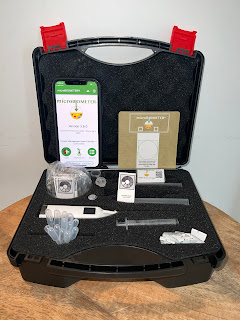
MicroBIOMETER® is a low-cost, 20-minute,
on-site soil test that measures:
- Microbial biomass
- Fungal to bacterial ratio
Using smartphone-based analysis, it
allows users to generate results directly in the field and eliminates delays
associated with lab testing and reducing the risk of biological changes during
transport.
Because results are instant, you can retest
as often as you need to, which turns out to be really valuable when you're
trying to understand how your soil responds to different management practices
over time. Instead of piecing together a picture from occasional lab reports,
you can actually track trends and make decisions based on what's happening
right now.
How Field-Based Testing Is Changing Soil
Health Measurement
Traditional soil testing has a fundamental
problem: by the time your sample reaches the lab and gets analysed, the biology
has already started to change. Microbial activity doesn't pause for shipping.
Even with careful handling, that time gap introduces variability you can't
fully control.
MicroBIOMETER® takes a different approach
as you can test in the field, get results in minutes, and capture soil
conditions as they actually are.
That shift makes a real practical
difference:
More accurate data
Without the delay between sampling and
analysis, your results reflect what's actually in the soil, not what changed
during transport or storage.
Faster decisions
Instead of waiting days or weeks for lab
results, you have actionable information in minutes. If something needs
adjusting, you can act on it straight away.
Regular monitoring, without the cost
The test is quick and affordable so that
retesting frequently becomes practical. That's how you start to see patterns,
how your practices are actually affecting microbial activity over time.
Fewer chances for error
Fewer steps between sample and result means
fewer opportunities for contamination or handling mistakes to skew your data.
Good sampling protocols still matter field tools don't change that. But combining solid protocols with something like MicroBIOMETER® gives you soil health data that's more reliable, more consistent, and a lot more useful.
Start Measuring Soil Health in Real Time
If lab delays are slowing down your
decision-making, MicroBIOMETER® gives you a faster, more practical way to
understand what's happening in your soil, right where you're standing.
- Measure microbial biomass and fungal-to-bacterial ratios
directly in the field
- Get results in 20 minutes using your smartphone
- Test regularly and track how your soil responds over time
Explore how MicroBIOMETER® can fit into your soil health strategy.
Frequently Asked Questions
How is microbiome soil testing different
from traditional soil testing?
Traditional testing looks at the chemistry such as nutrients and pH and usually involves sending samples to a lab. Microbiome testing is measuring something different entirely: the biological activity in your soil, like microbial biomass and fungal-to-bacterial balance. That biological data is also far more sensitive to time and handling, which is why being able to test in the field immediately makes such a difference.
Why does timing matter so much in soil
microbiome analysis?
Microbial activity doesn't stop when you collect a sample. By the time a lab-based sample gets analysed, the biology has already shifted, sometimes significantly. Testing in the field removes that delay and gives you results that actually reflect what's in your soil at that moment, not what it looked like hours later.
Can I track changes in soil health over
time with repeated testing?
Yes, and honestly, this is where
field-based testing really earns its keep. Because it's quick and
cost-effective, regular retesting becomes practical rather than aspirational.
Over time, that consistency lets you see real trends: how your soil is
responding to what you're doing, and where adjustments are actually making a
difference.

Comments
Post a Comment