Posts

Why Your Plants Aren't Growing: How an Organic Soil Test Reveals the Real Problem

Image
  You water regularly, and you add fertiliser, but they still look weak, grow slowly, or produce disappointing results. This frustrating situation happens to gardeners and farmers everywhere. The real culprit often hides underground in your soil. An organic soil test helps you see what's really happening beneath the surface. These tests reveal the invisible world that controls plant health. Once you understand your soil's true condition, you can fix the actual problems instead of guessing. Why Traditional Soil Tests Miss the Real Problems Standard soil tests only measure chemical nutrients like nitrogen, phosphorus, and potassium. They tell you what's in your soil but not whether plants can actually access those nutrients. It's like checking your bank balance without knowing if your debit card works. Soil health testing goes deeper by measuring the living biology in your soil. They also reveal the fungal-to-bacterial ratio, which indicates whether your soil ec...

How to Test Soil Health with a Soil Test Kit

Image
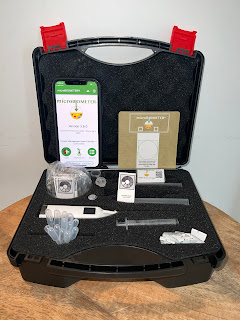
 Testing your soil doesn't have to be complicated or expensive. Using a soil health test kit is actually pretty straightforward once you know what you're doing, and it can tell you a lot about what's happening underground in your garden. Why test your soil in the first place? Most people think healthy soil just means "dirt that grows plants," but there's so much more going on down there. Your soil is full of tiny living things - bacteria, fungi, and other microbes - that help plants get nutrients and stay healthy. When you test your soil, you're basically checking on this underground ecosystem. Are there enough good microbes? Is the balance right? This information helps you figure out what your soil needs. What makes a good soil health test kit? Not all test kits are the same. The really useful ones look at microbial activity, not just basic things like pH (though that's important too). The microBIOMETER® PRO kits are pretty neat because t...

How To Turn Your Smartphone Into A Soil Lab

 Remember when you needed expensive equipment just to know what's happening in your soil? Well now that same device you use to scroll social media and read the news can analyze soil health with lab-quality precision. The Science Behind Your Pocket Soil Lab Your smartphone possesses something laboratories have relied on for decades: sophisticated optical sensors and powerful processing capabilities. Modern smartphones can detect color variations, light intensity, and chemical reactions through their cameras and built-in sensors. When paired with the right testing reagents and apps, these everyday devices transform into legitimate soil analysis tools. The principle is surprisingly straightforward. Soil samples react with specific chemical reagents, producing color changes that correspond to different nutrient levels, pH values, or biological activity. Your phone's camera captures these color variations, while specialized algorithms interpret the data and provide inst...

What Is microBIOMETER®? A Beginner’s Guide to On-Site Soil Microbial Testing

Image
  If you grow plants, fruits, vegetables, or even just grass, you know that healthy soil is very important. But how can you tell if your soil is healthy? That’s where something called microBIOMETER® comes in. This small tool helps you check how alive your soil is. It’s kind of like a health check-up, but for your soil. And it’s much easier and faster than sending soil to a lab. Let’s learn more in this beginner-friendly guide. What Is microBIOMETER®? microBIOMETER® is a test you can do yourself to see how many good microbes (tiny living things) are in your soil. These microbes help your plants grow strong. They break down dead stuff in the soil and turn it into food for your plants. This test is part of an organic soil test , which means it checks how healthy your soil is without using any harmful chemicals. The test tells you two important things: How many microbes are in the soil (this is called “microbial biomass”). Whether your soil has more f...

Science Corner: The Fungi Factor: Why Fungal Biomass Matters in Soil Health

  Here’s something that might surprise you: fungi represent one of the most diversified kingdoms on Earth, with estimates reaching up to 12 million species, yet only 150,000 fungal species are currently described. This massive knowledge gap hints at just how much we’re still discovering about these microscopic powerhouses that quietly drive soil health and ecosystem productivity. The Hidden Network: Understanding Soil Fungi Soil fungi aren’t just tiny mushrooms waiting to sprout after rain; They’re sophisticated organisms that form extensive underground networks. These thread-like structures, called hyphae, can extend for miles through soil, connecting plants and facilitating nutrient exchange across vast distances. Fungal biomass is particularly important due to its role as a biological bridge. While bacteria excel at breaking down simple organic compounds, fungi are up to 4x more effective at utilizing complex compounds like lignin and cellulose. Carbon Storage Champions: The Fun...

How a Soil Health Test Kit Saves Water and Fertilizer

Image
  Rising costs of water and fertilizer, combined with environmental concerns, have made efficient resource management a critical priority. A soil health test kit emerges as a powerful solution that helps growers make informed decisions, ultimately saving both water and fertilizer while improving crop performance. Precision Agriculture Through Data-Driven Decisions Modern soil health test kits enable precision agriculture by providing detailed information about specific field conditions. Instead of applying uniform amounts of water and fertilizer across entire fields, growers can adjust their inputs based on actual soil conditions in different zones. This targeted approach prevents over-application in areas where soil already contains adequate nutrients or moisture-holding capacity. For example, areas with higher organic matter content typically retain water longer, requiring less frequent irrigation. Similarly, zones with active microbial populations often have better nut...

How to Choose the Best Soil Testing Kits for Farmers in the USA

Image
Successful farming begins with understanding soil composition. Modern agriculture demands precise knowledge of soil nutrients, pH levels, and organic matter content to maximize crop yields.   Soil testing kits in the USA have evolved significantly, offering farmers powerful tools for soil analysis right on their farms. Knowing how to select the right testing kit can make a significant difference in crop management decisions and ultimate farm productivity. Essential Components of Quality Testing Kits   Professional-grade soil testing kits should include comprehensive testing capabilities for major nutrients like nitrogen, phosphorus, and potassium. A reliable kit must also measure pH levels accurately, as soil acidity directly affects nutrient availability to plants. Many advanced kits now include testing for micronutrients such as zinc, manganese, and iron, which play crucial roles in plant health and development. Digital vs. Traditional Testing Methods   ...